
Looking Back — and to the Future
Here’s the back story: From 2017-2019, we worked with several philanthropic organizations and research partners to assess the future fiscal health of Oregon’s cities, counties and other local governments. We recognized a looming crisis, and offered an opportunity to policymakers and community members to tackle the issue head on.
In the winter of 2019, community leaders in Pendleton and Hermiston invited us to come and spend a day with them to share the research and facilitate locally-led conversations about how city and county budget imbalances might impact communities in their region. We imagined those conversations would be the start of similar gatherings in regions around Oregon.
But less than three months later, COVID-19 changed everything. Our statewide partners had their hands full, and they couldn’t focus on fiscal challenges on the far horizon.
We don’t need to commission another two year study to say that those fiscal challenges didn’t go away in the last seven years — or to recognize that, in some cases, they’ve gotten worse.
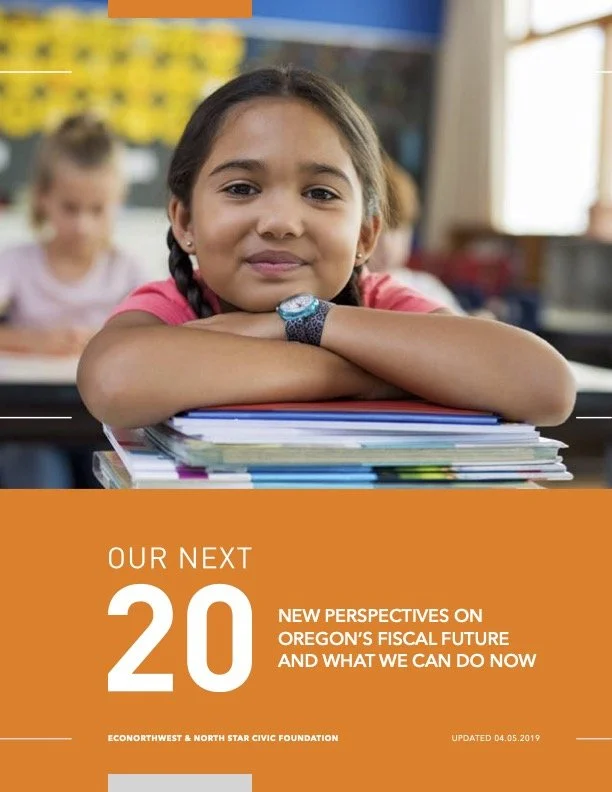
Our Next 20 (2019)
Oregon cities, counties, schools and other public services face meaningful budget shortfalls. It’s not a one-time problem. It’s the beginning of twenty years of fiscal stress.
In our report, we recommend four steps to help rebuild civic trust in each other and our state as a great place to live and to plan our collective futures. They still resonate:
Focus on the needs of local and state governments — and the communities they serve together — when designing solutions.
Prioritize and support ongoing, empowered civic leadership related to this statewide challenge — particularly with low-income communities, rural communities, and communities of color.
Get out of crisis by viewing budgetary decisions on a generational timeline, not annual or biennial negotiations.
Support civic understanding of public budgets by developing transparent budget forecasting tools, such as those adopted in other states.
We invited leaders to evaluate potential solutions based on four questions that are central to Oregon’s vitality over the next twenty years and beyond:
What are the impacts of current plans and new proposals for this generation and those that follow?
How do current plans and new solutions compare in terms of impacts across race and class?
How do current plans or new proposals serve or undermine the unique economic development needs of rural Oregon?
Do current plans or new proposals set the stage for Oregon’s future economic health, economic growth, and shared prosperity?
We’re still learning, and we invite you to join us.
We believe Our Next 20 is still relevant today. Our 2019 report was designed to be a starting place for community conversations throughout Oregon.
Are you interested in hosting a conversation in your community about the impacts of city and county budget concerns — it could be a small gathering with 2-3 community leaders, or a large thing. Have questions or want to learn more?
We’d like to hear from you. Email Caitlin to connect.